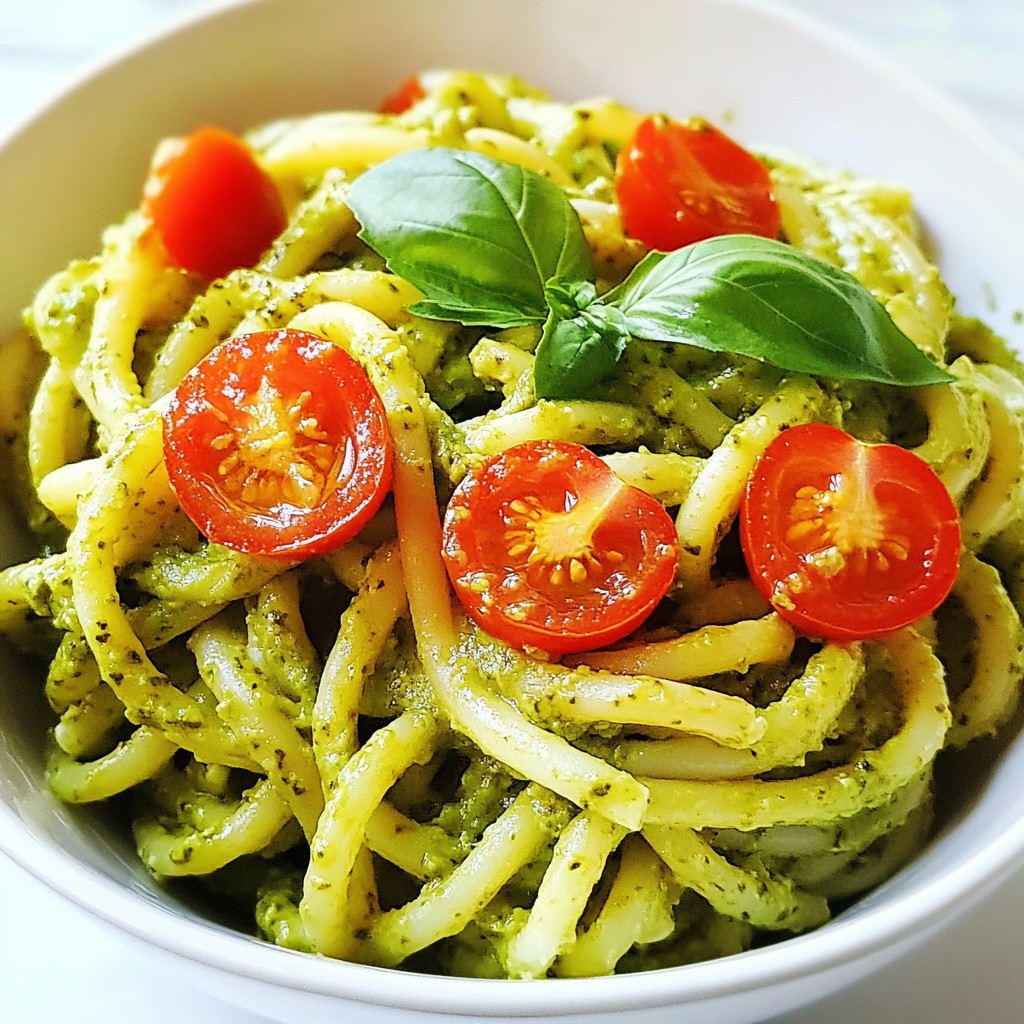
Are you ready to try a fresh and creamy twist on pasta? My Creamy Avocado Pesto Pasta is not just easy to make, it’s packed with flavor and nutrients. In this post, I’ll guide you through simple steps to create a dish that everyone will love. With just a few key ingredients, you can impress your family or friends at the dinner table. Let’s dive into this delicious and healthy recipe!
Why I Love This Recipe
- Deliciously Creamy: The avocado creates a rich, creamy texture that is both satisfying and nutritious.
- Fresh Ingredients: This recipe uses fresh basil and ripe avocados, making it vibrant and full of flavor.
- Quick and Easy: With a prep time of just 10 minutes, this dish is perfect for busy weeknights.
- Customizable: You can easily adjust the ingredients to suit your dietary preferences, such as using nutritional yeast for a vegan option.
Ingredients
Main Ingredients for Creamy Avocado Pesto Pasta
- 2 ripe avocados
- 1 cup fresh basil leaves
- 2 cloves garlic, minced
- 1/4 cup grated Parmesan cheese (or nutritional yeast for a vegan option)
- 1/4 cup pine nuts (or walnuts)
- 2 tablespoons lemon juice
- 1/3 cup extra virgin olive oil
- Salt and pepper to taste
- 8 ounces pasta of choice (spaghetti, fettuccine, or gluten-free)
To make this creamy avocado pesto pasta, you need fresh and simple ingredients. The ripe avocados give a nice creamy texture. Fresh basil adds a bright flavor. Garlic brings warmth and depth. You can choose between Parmesan cheese or nutritional yeast for a vegan option. Pine nuts are traditional, but walnuts work too. Lemon juice adds a touch of acidity. Olive oil makes everything smooth and rich.
Optional Garnishes
- Cherry tomatoes, halved
- Fresh basil leaves
Garnishing makes your dish pop. Halved cherry tomatoes add color and sweetness. Fresh basil leaves give a fresh look and taste. You can also drizzle a bit of olive oil on top for extra richness.
Substitutions for Dietary Preferences
- Gluten-free pasta for gluten-free diets
- Nutritional yeast instead of Parmesan for vegan diets
- Walnuts instead of pine nuts for nut allergies
This recipe is flexible. If you need gluten-free options, just use gluten-free pasta. For a vegan dish, swap Parmesan cheese for nutritional yeast. If you have nut allergies, replace pine nuts with walnuts.
Step-by-Step Instructions
Cooking the Pasta
To start, grab a large pot. Fill it with water and add a good pinch of salt. Bring the water to a boil over high heat. Once boiling, add 8 ounces of your favorite pasta. I like using spaghetti or fettuccine. Cook the pasta according to the package instructions until it is al dente. This usually takes about 8 to 10 minutes. When the pasta is ready, reserve 1/2 cup of the pasta water. Then, drain the rest in a colander.
Preparing the Avocado Pesto
Next, it's time to make the avocado pesto. Take a food processor and add 2 ripe avocados, 1 cup of fresh basil leaves, and 2 cloves of minced garlic. Then, add 1/4 cup of grated Parmesan cheese and 1/4 cup of pine nuts. Pour in 2 tablespoons of lemon juice. Don’t forget a pinch of salt and pepper! Blend all these ingredients until the mixture is smooth. You might need to scrape down the sides a few times to ensure everything gets blended well.
Combining Pasta with Pesto
Now, let’s combine the pasta and the pesto. In the same pot you used for the pasta, add the drained pasta back in. Spoon the creamy avocado pesto over the pasta. Toss gently to mix. If the sauce is too thick, add some of the reserved pasta water. Do this slowly, adding a little at a time, until the sauce is just right for you.
Now, your creamy avocado pesto pasta is ready to serve!
Tips & Tricks
How to Choose Ripe Avocados
To pick the best avocados, look for ones that feel slightly soft when you press them. If they are firm, they are not ripe yet. A ripe avocado has a dark green or black skin. Avoid avocados with dark spots or cracks. If you find unripe avocados, place them in a paper bag to speed ripening. Keep them at room temperature. They should ripen in one to three days.
Best Pasta Types for this Recipe
I like using spaghetti or fettuccine for creamy avocado pesto pasta. Both types hold the sauce well. You can also use gluten-free pasta if needed. The shape of the pasta affects how well it mixes with the pesto. Choose a pasta shape that you enjoy. Try to select something that you can easily twirl on your fork.
Making Ahead and Reheating Tips
You can make the avocado pesto ahead of time. Store it in an airtight container in the fridge for up to three days. To prevent browning, press a piece of plastic wrap directly onto the surface of the pesto. When you are ready to eat, simply warm the pasta on low heat. Add a splash of water or olive oil to make it creamy again.
Pro Tips
- Use Ripe Avocados: Make sure your avocados are perfectly ripe for the creamiest pesto. They should yield slightly when pressed, indicating their readiness.
- Add Flavor with Nuts: Experiment with different nuts like walnuts or cashews for a unique flavor profile that complements the avocado.
- Reserve Pasta Water: Always reserve some pasta cooking water before draining; it’s a great way to adjust the consistency of your pesto without losing flavor.
- Fresh Ingredients Matter: Using fresh basil and garlic can greatly enhance the taste of your pesto, making it vibrant and aromatic.
Variations
Vegan Options
You can easily make this creamy avocado pesto pasta vegan. Just swap the Parmesan cheese for nutritional yeast. This change keeps the flavor rich without using dairy. Also, ensure your pasta is egg-free. Many brands offer tasty vegan pasta options.
Nut-Free Variants
If you need a nut-free version, use sunflower seeds instead of pine nuts. Sunflower seeds blend well and give a nice taste. You can also skip the nuts altogether if you prefer. The pasta will still be creamy and delicious.
Adding Proteins or Vegetables
Want to boost nutrition? Add cooked chicken, shrimp, or chickpeas to your pasta. You can also toss in veggies like spinach, broccoli, or bell peppers. Just mix them in with the pesto and pasta. This adds flavor and makes your meal more filling.
Storage Info
How to Store Leftover Pasta
To keep leftover creamy avocado pesto pasta fresh, place it in an airtight container. This helps prevent air from drying it out. Store it in the fridge for up to three days. When you're ready to eat, check the pasta for any signs of spoilage. If it looks good, it should still taste great!
Freezing Pesto for Later Use
You can freeze your avocado pesto for future meals. First, pour the pesto into an ice cube tray. Cover it tightly and freeze until solid. Once frozen, pop the cubes out and store them in a zip-top bag. This way, you can use pesto cubes in future dishes. They will keep in the freezer for up to three months.
Best Ways to Reheat
To reheat your pasta, place it in a pan over low heat. Add a splash of water or olive oil to keep it moist. Stir gently until warmed through. Another option is to microwave it in short bursts. Cover it loosely to avoid splatters. Check and stir often to heat evenly. Enjoy your creamy avocado pesto pasta just like new!
FAQs
Can I make this recipe gluten-free?
Yes, you can easily make this recipe gluten-free. Just swap regular pasta for gluten-free pasta. Many brands offer gluten-free options that taste great. Look for rice, quinoa, or chickpea pasta. Cook it according to the package directions. Enjoy your creamy avocado pesto without gluten!
How do I prevent the avocado from browning?
To keep your avocado from browning, use lemon juice. The acid in lemon juice slows down browning. You can mix it right in the pesto. If you have leftover pesto, press plastic wrap directly on the surface. This keeps air out and helps keep it fresh.
What can I substitute for Parmesan cheese?
You can use nutritional yeast as a cheese substitute. It gives a cheesy flavor but is dairy-free. You can also try using vegan cheese. If you want a nutty taste, blend in some extra pine nuts or walnuts. This way, you still get that creamy texture!
This blog post covered how to make creamy avocado pesto pasta. We discussed key ingredients, from ripe avocados to pasta types. You learned how to prepare the pesto, combine it with pasta, and even add tasty garnishes or substitutions for diets. Remember these tips for storage and reheating to enjoy leftovers. Explore variations to fit your taste and needs. With this guide, you can create a simple yet delightful dish that’s sure to impress. Enjoy cooking and share it with friends!