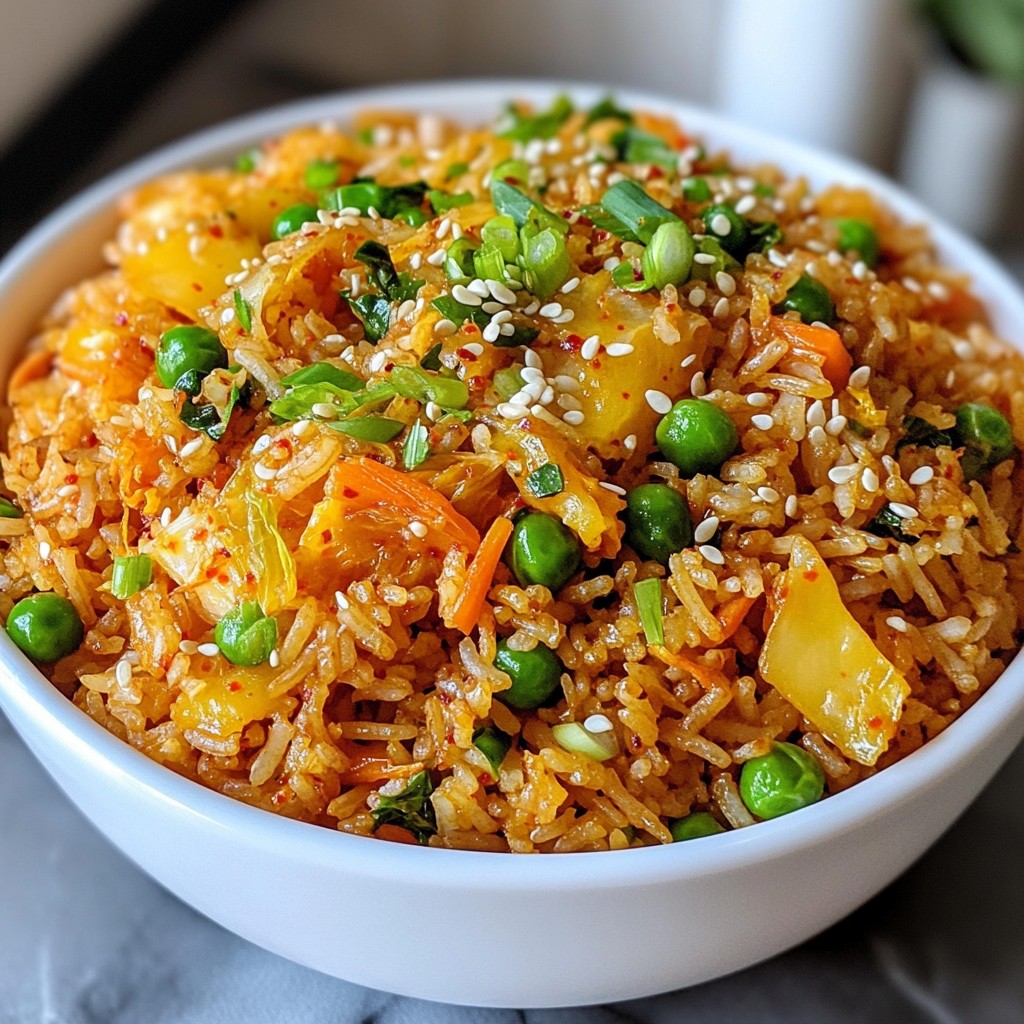
Are you ready to spice up your dinner routine? Spicy Kimchi Fried Rice is a savory delight that packs a punch! This easy dish combines the tangy goodness of kimchi with perfectly cooked rice. You'll learn how to customize your fried rice with fun ingredients, tips for the best texture, and variations that suit any taste. Let’s dive into this mouthwatering treat that’s sure to impress your friends and family!
Why I Love This Recipe
- Quick and Easy: This recipe takes just 20 minutes to prepare, making it perfect for busy weeknights.
- Flavor Explosion: The combination of kimchi and gochujang brings a delightful heat and depth of flavor to the dish.
- Versatile: You can easily customize this fried rice by adding your favorite vegetables or proteins.
- Leftover Friendly: This dish is a fantastic way to use up leftover rice and kimchi, reducing food waste.
Ingredients
Main Ingredients for Spicy Kimchi Fried Rice
To make a tasty spicy kimchi fried rice, you need:
- 2 cups cooked rice (preferably day-old)
- 1 cup kimchi, chopped
- 1 tablespoon vegetable oil
- 1 medium onion, diced
- 2 cloves garlic, minced
- 1 carrot, julienned
- 1 cup frozen peas
- 2 tablespoons soy sauce
- 1 tablespoon gochujang (Korean chili paste)
- 2 green onions, chopped
- 2 large eggs (optional)
- Sesame seeds for garnish
- Salt and pepper to taste
Optional Ingredients for Customization
You can add fun twists to your fried rice. Here are some options:
- Tofu or chicken for extra protein
- Bell peppers for color and crunch
- Spinach for added greens
- Mushrooms for a savory touch
- Chopped nuts for texture
Tips on Choosing Quality Kimchi
Choosing the right kimchi is key. Here’s how to find the best:
- Look for fresh, crunchy vegetables.
- Choose kimchi with a good balance of spice and sourness.
- Check the ingredients for natural flavors.
- Opt for kimchi made with Napa cabbage for classic taste.
- Buy from local brands or markets for authentic flavor.
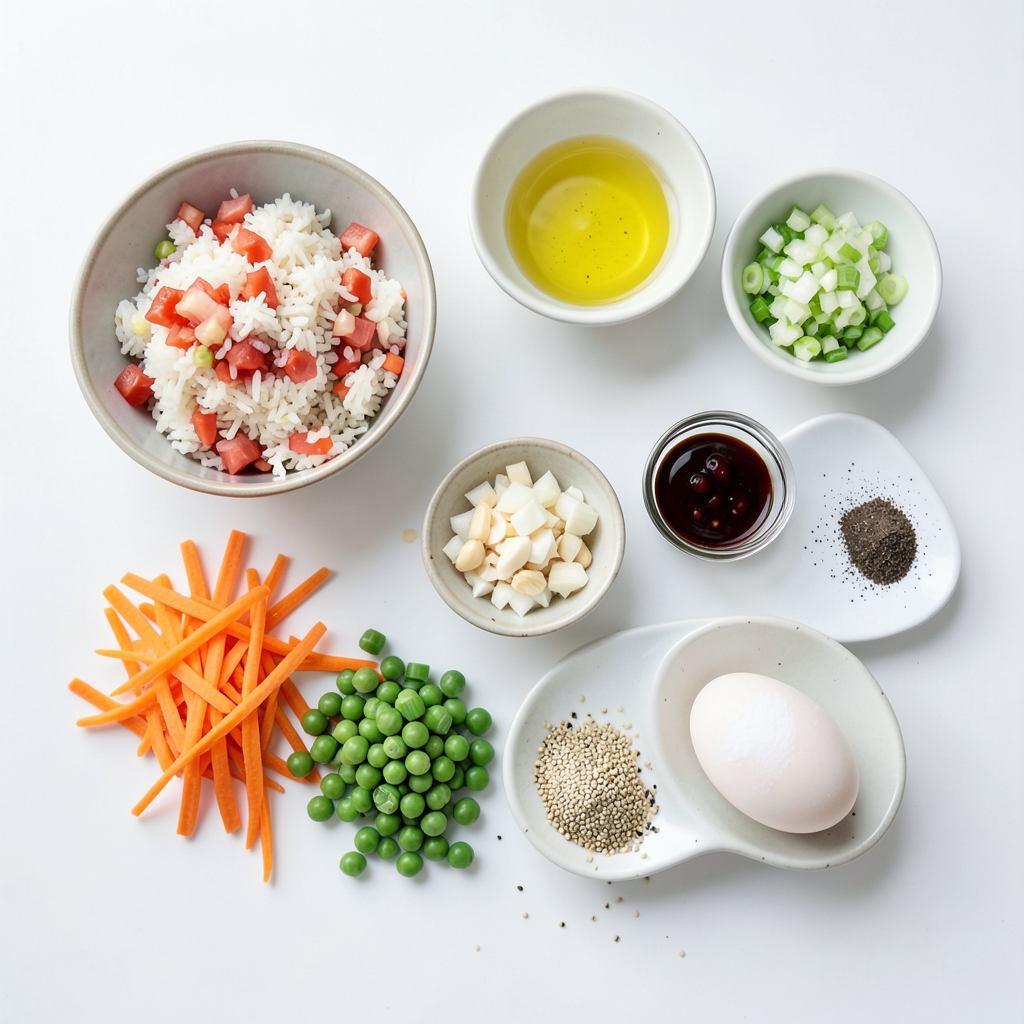
Step-by-Step Instructions
Preparation Steps
Gather your ingredients to make this dish. You need:
- 2 cups cooked rice (preferably day-old)
- 1 cup kimchi, chopped
- 1 tablespoon vegetable oil
- 1 medium onion, diced
- 2 cloves garlic, minced
- 1 carrot, julienned
- 1 cup frozen peas
- 2 tablespoons soy sauce
- 1 tablespoon gochujang (Korean chili paste)
- 2 green onions, chopped
- 2 large eggs (optional)
- Sesame seeds for garnish
- Salt and pepper to taste
Chop the kimchi and vegetables while your rice is at room temperature. Day-old rice works best as it is less sticky.
Cooking Process
1. Heat a large skillet or wok over medium-high heat. Add the vegetable oil.
2. When the oil is hot, add the diced onion. Sauté for 2-3 minutes until it turns translucent.
3. Next, stir in the minced garlic and julienned carrot. Cook for 2 more minutes until fragrant.
4. Add the chopped kimchi to the skillet. Stir-fry for about 3-4 minutes to caramelize it slightly.
5. Now, add the cooked rice. Break apart any clumps and mix well with the other ingredients.
6. Drizzle in the soy sauce and gochujang. Stir thoroughly to blend the flavors.
7. Fold in the frozen peas. Cook for another 2-3 minutes until everything is heated through. Season with salt and pepper.
8. If you want eggs, push the rice to one side of the pan. Crack the eggs into the skillet and scramble them. Mix the eggs into the rice.
9. Finally, stir in the chopped green onions.
Tips for Achieving the Best Texture
To get the best texture, use day-old rice. Fresh rice can be too sticky. When you add the rice, break it up gently. Stir-fry on medium-high heat for a bit of crispiness. Don’t overcrowd the pan; this helps the rice fry better. Garnish with sesame seeds for added crunch.
Tips & Tricks
Using Day-Old Rice for Best Results
Using day-old rice makes this dish better. Fresh rice can be too sticky. Day-old rice dries out a bit in the fridge. This helps keep the grains separate. You want each grain to show up in your dish. If you happen to have leftover rice, use that!
Adjusting Spice Levels
Spice is a big part of kimchi fried rice. You can change the spice to fit your taste. If you like it mild, use less gochujang. Start with one teaspoon. Taste it, then add more if you dare! For a fiery kick, add more gochujang or some chili flakes. Remember to balance the spice with a sweet touch, like sugar or honey.
Adding Protein Options (e.g., Tofu, Chicken)
Protein can make your dish heartier. Tofu is a great choice for a vegetarian meal. Just cube it and sauté it first. If you prefer meat, chicken works well. Cook the chicken pieces until golden. Mix them in with your rice for a filling dish. You can also use shrimp or beef, depending on your mood.
Pro Tips
- Use Day-Old Rice: Using rice that was cooked a day before helps to dry it out slightly, making it less sticky and perfect for frying.
- Customize Spice Level: Adjust the amount of gochujang to your taste. If you prefer milder flavors, start with less and add more as needed.
- Incorporate Proteins: Feel free to add cooked chicken, shrimp, or tofu to make the dish more filling and protein-rich.
- Garnish for Flavor: Don't skip the sesame seeds and green onions on top; they add a wonderful crunch and burst of flavor to the dish.
Variations
Vegetarian and Vegan Alternatives
If you want a vegetarian or vegan version, skip the eggs. Use tofu instead for protein. Firm tofu works best. Just cube it and sauté it with the onions. For more flavor, marinate the tofu in soy sauce or gochujang before cooking. You can also add mushrooms for a meaty texture. Portobello or shiitake mushrooms fit well.
Different Vegetable Additions
Feel free to mix in other veggies. Zucchini, bell peppers, or broccoli can add color and crunch. Just chop them small. Add them when you stir-fry the onions. This helps them cook evenly. You can even toss in leafy greens like spinach for extra nutrients.
Spicy Kimchi Fried Rice with Seafood
For a seafood twist, shrimp or squid are great choices. Cook shrimp until pink and tender. Add them right after the garlic. Squid can be added in thin slices. Cook them briefly to keep them tender. Both options give your dish a fresh taste.
Storage Info
How to Properly Store Leftovers
To keep your spicy kimchi fried rice fresh, let it cool first. Use an airtight container to store it. Place the rice in the fridge if you plan to eat it soon. It will last for about 3 to 4 days.
Reheating Instructions
When you're ready to enjoy your leftovers, you can reheat them quickly. Use a microwave-safe bowl and cover it with a lid or plastic wrap. Heat it in the microwave for about 1 to 2 minutes. Stir halfway through to heat evenly. You can also reheat it in a skillet over medium heat. Add a splash of water or oil to prevent sticking.
Freezing for Future Meals
If you want to save your spicy kimchi fried rice for later, freezing is a great option. Allow the rice to cool completely before packing. Use freezer-safe bags or containers. Make sure to remove as much air as possible. This will help prevent freezer burn. The rice can stay fresh in the freezer for up to 2 months. When ready to eat, simply thaw it in the fridge overnight and reheat as mentioned above.
FAQs
What is Kimchi and Why Use It?
Kimchi is a delicious Korean dish made from fermented vegetables. You often find it made with napa cabbage and radishes. Kimchi adds a spicy, tangy flavor to your meals. It also brings probiotics, which are great for your gut health. Using kimchi in fried rice gives it a unique taste that you won’t forget. The heat from the kimchi pairs well with rice, making each bite flavorful.
Can I Use Fresh Rice Instead of Day-Old?
You can use fresh rice, but day-old rice works best. Day-old rice has less moisture, which helps it fry better. Fresh rice can become mushy when cooked. If you use fresh rice, spread it out to cool before adding it to the pan. This can help reduce moisture. But trust me, using day-old rice will give you the best texture and flavor.
How Do I Make This Recipe Gluten-Free?
To make spicy kimchi fried rice gluten-free, swap out soy sauce for tamari. Tamari is a gluten-free version of soy sauce. You can also check that your kimchi doesn’t contain any wheat. Many brands of kimchi are gluten-free, but it’s always good to read labels. This way, you can enjoy your dish without worrying about gluten.
What to Serve with Spicy Kimchi Fried Rice?
Spicy kimchi fried rice is tasty on its own, but you can serve it with many sides. Try pairing it with a simple salad for a fresh crunch. You can also add a fried egg on top for extra protein. If you want something heartier, serve it with grilled chicken or tofu. Add some pickled vegetables for a nice contrast in flavors.
We covered the essential ingredients for spicy kimchi fried rice, from main to optional ones. I shared tips on selecting quality kimchi, as it affects the dish’s flavor. You learned the step-by-step cooking process and how to get the best texture. Remember to use day-old rice for best results and explore protein options. You can try tasty variations, store leftovers easily, and answer common questions. Embrace your kitchen skills and enjoy making this dish your own!